
How to Pack Fragile Dishes and Glassware for a Move
A step-by-step guide to packing dishes, glasses, and fragile kitchen items so they arrive in one piece, from the right materials to the pro techniques.
Licence info: CPUC #191536 CA #491814
A step-by-step guide to packing dishes, glasses, and fragile kitchen items so they arrive in one piece, from the right materials to the pro techniques.
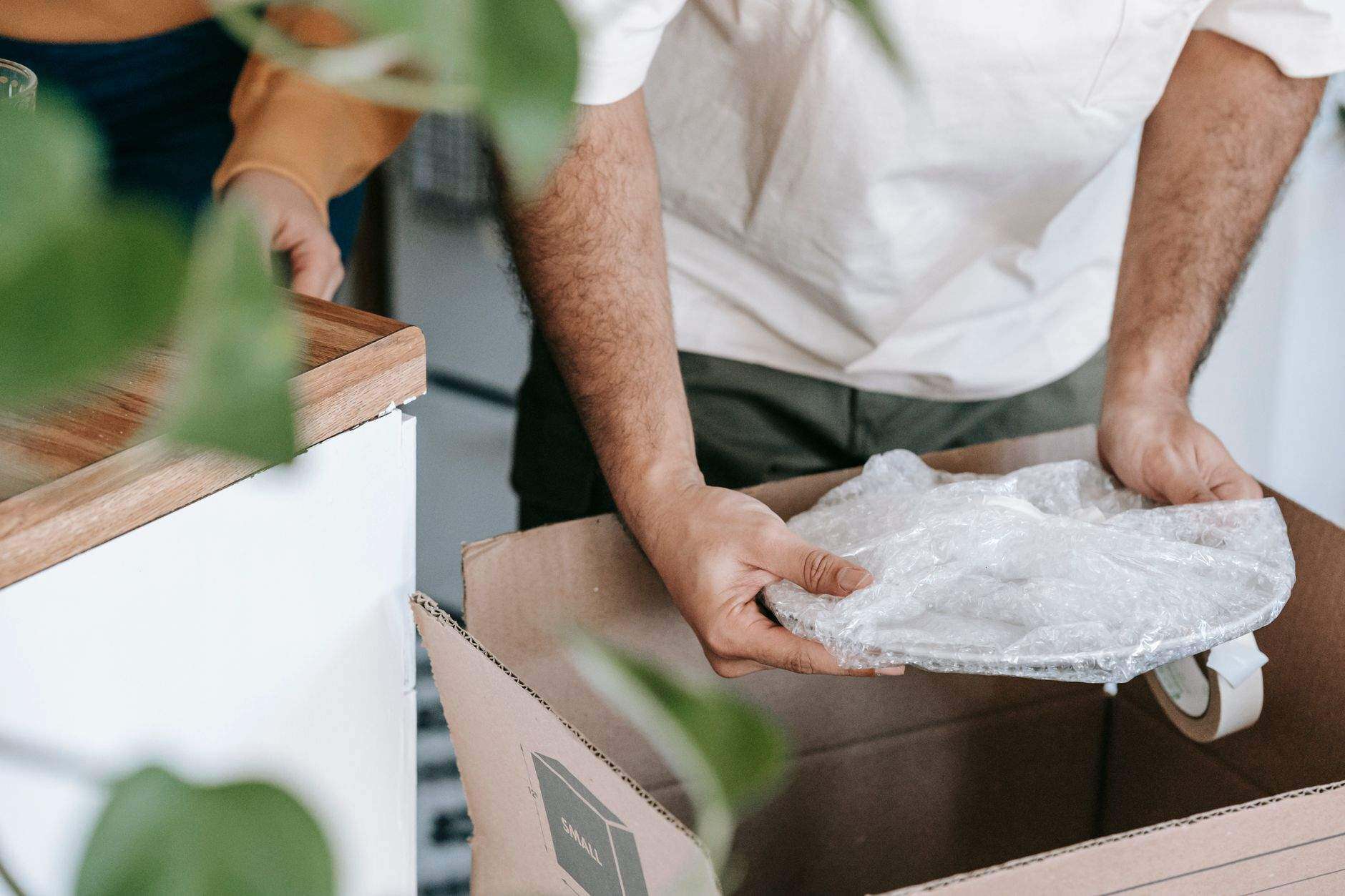
The kitchen is where most breakage happens on moving day. Plates, glasses, stemware, and ceramics are heavy, awkward, and fragile all at once, and a box packed wrong is a box of shards by the time it reaches the new place. The good news is that packing fragile kitchen items well is mostly technique, and once you know the rules it is not hard.
Here is how to pack dishes and glassware so they survive the trip, the materials that make the difference, and where hiring help pays off.
A few principles prevent most breakage. Use small boxes so they do not get too heavy to handle safely. Cushion the bottom and top of every box with crushed paper. Wrap each item individually rather than bundling. Fill every gap so nothing can shift in transit, because movement is what breaks things. And never lay plates flat, which is the single most common mistake. Getting these right matters more than any single fancy material, and they are the same habits behind the broader advice in our guide to packing mistakes to avoid.
Plates are strongest on their edge, not their face. Wrap each plate individually in packing paper, then stack the wrapped plates vertically, on their edges, in a small box lined with crushed paper, like records in a crate. This orientation lets the plates flex slightly and distributes pressure along the strong edge rather than across the fragile center. Pack heavier plates toward the bottom, add crushed paper between and around them so nothing moves, and top off with a cushioning layer before closing the box.
Glasses need the most protection. Stuff a little crushed paper inside each glass to support the walls, then wrap the outside in paper or bubble wrap, paying special attention to the fragile stems on wine glasses. Place glasses upright in a box fitted with cardboard cell dividers, which keep each glass in its own protected cell and stop them from knocking together. Heavier tumblers can go on the bottom, delicate stemware on top. As always, fill any remaining space so nothing rattles.
Bowls nest well, but only with a layer of paper between each one, and the nested stack should still be wrapped as a unit and cushioned. Serving platters and large ceramics are essentially oversized plates, so pack them on edge with generous padding. For anything with a handle, spout, or delicate protrusion, wrap those weak points with extra bubble wrap first. Truly irreplaceable or high-value pieces deserve the same treatment professionals give to fragile items, which our guide on moving delicate items without damage covers in detail.
Every fragile box should be labeled clearly on multiple sides with “FRAGILE” and which room it belongs to, so it is handled carefully and lands in the right place. Good labeling is a small habit that saves real time and breakage, and our take on labeling boxes for faster unpacking goes deeper. When loading, fragile boxes go on top of heavier ones, never underneath, and should be wedged so they cannot slide. Having the room prepped and boxes staged before the truck arrives keeps everything moving, which is the point of our guide to preparing your home before movers arrive.
Packing a full kitchen well takes hours and a lot of materials, and it is the room where mistakes are most expensive. If you are short on time, moving a large collection, or simply do not want to risk your good china, professional packing is worth it. Movers pack kitchens quickly using the right materials and techniques, and when they pack the box, their valuation coverage typically applies to what is inside it. Our packing services in San Diego handle the fragile-kitchen job start to finish, and a trusted local crew of Encinitas movers and across the county can take the whole task off your list. For general packing method, guides like U-Haul’s packing resources and the American Trucking Associations Moving and Storage Conference echo the same techniques.
Beyond everyday plates and glasses, most kitchens hold a few items that need their own approach. Knives should be wrapped blade-first in a towel or knife guard and clearly marked so no one is surprised unpacking them. Small appliances travel best in their original boxes if you kept them; otherwise wrap the cord, pad the body, and box them snugly. Stand mixers and other heavy countertop machines are dense and awkward, so box them alone with heavy padding rather than combining them with lighter items. Fine china and crystal deserve the full treatment, individual wrapping, dividers, and a “FRAGILE” label, and often a double-boxed approach where the packed box sits inside a larger padded one. Anything genuinely irreplaceable is worth photographing before it goes in the box, the same habit that protects you across the whole move.
Packing well pays off at the other end. Because you labeled each box by room and marked the fragile ones, the kitchen boxes land in the kitchen and get opened carefully, not crushed under heavier ones. Unpack fragile items over a padded surface, a towel-lined counter, so a slip does not become a break, and keep the packing paper until everything is out, since small items hide in it. A well-packed, well-labeled kitchen is one of the smoothest rooms to reset, which frees you to focus on settling in, as our guide on settling into your San Diego home lays out. When you would rather skip the whole job, our movers in San Diego can pack, transport, and even unpack the kitchen for you.
On their edge, standing vertically like records. Plates are far stronger along the edge than across the face, so this orientation dramatically reduces breakage.
A small dish-pack box with cardboard cell dividers for glassware. Small boxes keep the weight manageable, and dividers keep each glass isolated and protected.
Use clean packing paper or newsprint. Printed newspaper works in a pinch but the ink smudges onto dishes and glass, creating a cleaning job at the other end.
Often yes. The kitchen is the most time-consuming and breakage-prone room, and professional packing is fast, uses the right materials, and usually brings coverage on what the movers pack.
Fragile kitchen items survive when you use small boxes, wrap everything individually, stand plates on edge, isolate glasses in dividers, and fill every gap. Do that and the kitchen stops being the scary box on the truck. When you would rather hand it off, request a free quote and let a professional crew pack the fragile stuff the right way.