
Cómo empacar vajilla y cristalería frágil para una mudanza
Una guía paso a paso para empacar platos, vasos y utensilios de cocina frágiles para que lleguen intactos, desde los materiales adecuados hasta las técnicas profesionales.
Información de licencia: CPUC #191536 CA #491814
Una guía paso a paso para empacar platos, vasos y utensilios de cocina frágiles para que lleguen intactos, desde los materiales adecuados hasta las técnicas profesionales.
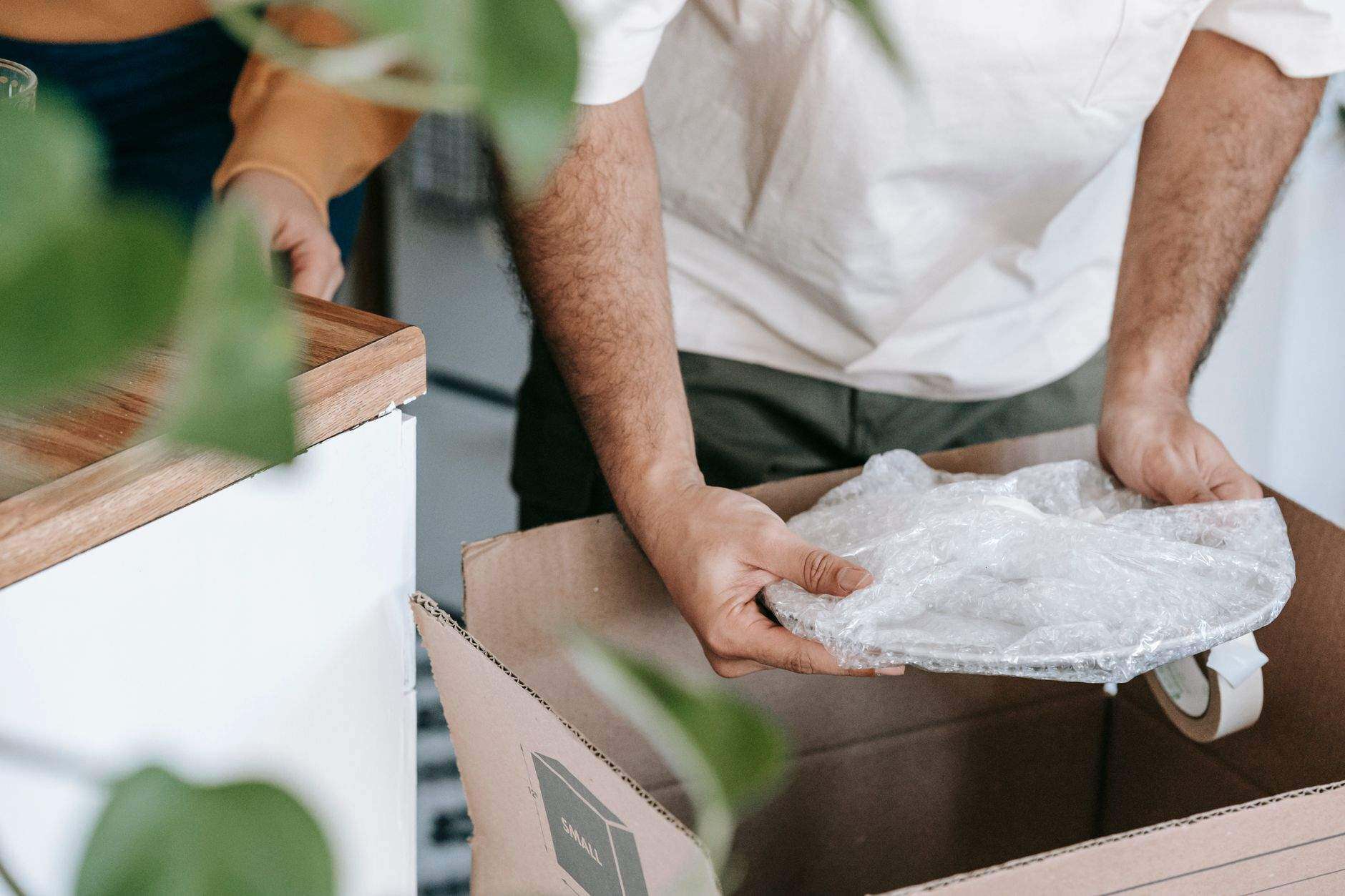
La cocina es donde más se rompen las cosas el día de la mudanza. Platos, vasos, copas y cerámica son pesados, difíciles de manejar y frágiles a la vez, y una caja mal embalada se convierte en un montón de pedazos al llegar a la nueva casa. La buena noticia es que embalar bien los objetos frágiles de la cocina es cuestión de técnica, y una vez que se conocen las reglas, no es difícil.
Aquí te explicamos cómo empacar la vajilla y la cristalería para que sobrevivan al viaje, qué materiales marcan la diferencia y en qué casos conviene contratar ayuda.
Unos pocos principios previenen la mayoría de las roturas. Use cajas pequeñas para que no sean demasiado pesadas para manipularlas con seguridad. Acolche la parte inferior y superior de cada caja con papel arrugado. Envuelva cada artículo individualmente en lugar de agruparlos. Rellene todos los huecos para que nada se mueva durante el transporte, ya que el movimiento es lo que rompe las cosas. Y nunca coloque los platos planos, que es el error más común. Hacer bien estas cosas es más importante que cualquier material sofisticado, y son los mismos hábitos que sustentan los consejos más generales de nuestra guía para errores de embalaje que se deben evitar.
Los platos son más resistentes en sus bordes, no en su superficie. Envuelva cada plato individualmente en papel de embalaje y apílelos verticalmente, de canto, en una caja pequeña forrada con papel arrugado, como si fueran discos en una caja de cartón. Esta disposición permite que los platos se flexionen ligeramente y distribuye la presión a lo largo del borde más resistente, en lugar de sobre el centro más frágil. Coloque los platos más pesados en la parte inferior, añada papel arrugado entre ellos y alrededor para que no se muevan, y cubra con una capa de material amortiguador antes de cerrar la caja.
Los vasos necesitan la mayor protección. Rellene cada vaso con papel arrugado para reforzar las paredes y, a continuación, envuélvalos con papel o plástico de burbujas, prestando especial atención a los tallos frágiles de las copas de vino. Coloque los vasos en posición vertical en una caja con separadores de cartón, que mantienen cada vaso en su propio compartimento protegido y evitan que se golpeen entre sí. Los vasos más pesados pueden ir en la parte inferior y las copas delicadas en la superior. Como siempre, rellene cualquier espacio restante para que nada se mueva.
Los cuencos se apilan bien, pero solo con una capa de papel entre cada uno, y la pila apilada debe envolverse como una unidad y acolcharse. Las fuentes para servir y las cerámicas grandes son esencialmente platos de gran tamaño, así que colóquelas de canto con un acolchado generoso. Para cualquier cosa con asa, pico o protuberancia delicada, envuelva primero esos puntos débiles con plástico de burbujas adicional. Las piezas verdaderamente irremplazables o de alto valor merecen el mismo trato que los profesionales dan a los artículos frágiles, que nuestra guía sobre Traslado de objetos delicados sin dañarlos cubre en detalle.
Cada caja frágil debe estar claramente etiquetada en varios lados con “FRÁGIL” y la habitación a la que pertenece, para que se manipule con cuidado y llegue al lugar correcto. Un buen etiquetado es un pequeño hábito que ahorra tiempo y evita roturas, y nuestra opinión sobre Etiquetar las cajas para un desembalaje más rápido. va más allá. Al cargar, las cajas frágiles van encima de las más pesadas, nunca debajo, y deben calzarse para que no se deslicen. Tener la habitación preparada y las cajas dispuestas antes de que llegue el camión mantiene todo en marcha, que es el objetivo de nuestra guía para Preparando su casa antes de que lleguen los transportistas..
Empacar una cocina completa correctamente lleva horas y muchos materiales, y es la habitación donde los errores resultan más costosos. Si tiene poco tiempo, se muda con una gran colección o simplemente no quiere arriesgar su vajilla fina, vale la pena contratar un servicio de embalaje profesional. Los profesionales de mudanzas embalan cocinas rápidamente utilizando los materiales y técnicas adecuados, y cuando embalan la caja, su cobertura de valoración generalmente se aplica al contenido. Servicios de embalaje en San Diego manejar el trabajo de cocina frágil de principio a fin, y un equipo local de confianza de Mudanzas en Encinitas y en todo el condado pueden quitarte toda la tarea de la lista. Para el método general de empaque, guías como Recursos de embalaje de U-Haul y el Conferencia de mudanzas y almacenamiento de la Asociación Estadounidense de Camioneros Repiten las mismas técnicas.
Más allá de los platos y vasos de uso diario, la mayoría de las cocinas tienen algunos artículos que requieren un trato especial. Los cuchillos deben envolverse con la hoja hacia adelante en una toalla o protector de cuchillos y estar claramente marcados para que nadie se sorprenda al desempacarlos. Los pequeños electrodomésticos se transportan mejor en sus cajas originales, si las conservaste; de lo contrario, envuelve el cable, acolcha la carcasa y empaquétalos bien. Las batidoras de pie y otros electrodomésticos pesados de encimera son densos y difíciles de manejar, así que empaquétalos solos con acolchado grueso en lugar de combinarlos con artículos más ligeros. La porcelana fina y el cristal merecen un trato especial: envoltorio individual, separadores y una etiqueta de "FRÁGIL", y a menudo se recomienda un embalaje doble donde la caja embalada se coloca dentro de una caja acolchada más grande. Cualquier objeto verdaderamente irremplazable merece ser fotografiado antes de meterlo en la caja, el mismo hábito que te protege durante toda la mudanza.
Empacar bien da sus frutos al final. Como etiquetaste cada caja por habitación y marcaste las frágiles, las cajas de la cocina llegan a la cocina y se abren con cuidado, sin aplastarse bajo las más pesadas. Desempaca los artículos frágiles sobre una superficie acolchada, una encimera forrada con una toalla, para que un resbalón no se convierta en una rotura, y guarda el papel de embalaje hasta que hayas sacado todo, ya que los objetos pequeños se esconden en él. Una cocina bien empacada y bien etiquetada es una de las habitaciones más fáciles de reorganizar, lo que te permite concentrarte en instalarte, como indica nuestra guía sobre Instalándose en su hogar de San Diego se detalla. Cuando prefiera saltarse todo el trabajo, nuestro empresas de mudanzas en San Diego Podemos empacar, transportar e incluso desempacar la cocina por usted.
Colocadas de canto, en posición vertical como discos. Los platos son mucho más resistentes en el canto que en la superficie, por lo que esta orientación reduce drásticamente las roturas.
Una pequeña caja para vajilla con separadores de cartón para cristalería. Las cajas pequeñas facilitan el manejo del peso, y los separadores mantienen cada vaso aislado y protegido.
Utilice papel de embalaje limpio o papel de periódico. El papel de periódico impreso sirve en caso de apuro, pero la tinta mancha los platos y vasos, lo que obliga a limpiarlos después.
A menudo, sí. La cocina es la habitación que más tiempo consume y donde más se producen roturas, y el embalaje profesional es rápido, utiliza los materiales adecuados y, por lo general, incluye cobertura para lo que empaquen los transportistas.
Los utensilios de cocina frágiles se conservan mejor si se utilizan cajas pequeñas, se envuelven individualmente, se colocan los platos de canto, se aíslan los vasos con separadores y se llenan todos los huecos. De esta forma, la cocina deja de ser una caja peligrosa en el camión. Si prefiere dejarlo en manos de profesionales, solicite un presupuesto gratuito y deje que empaquen los objetos frágiles correctamente.